

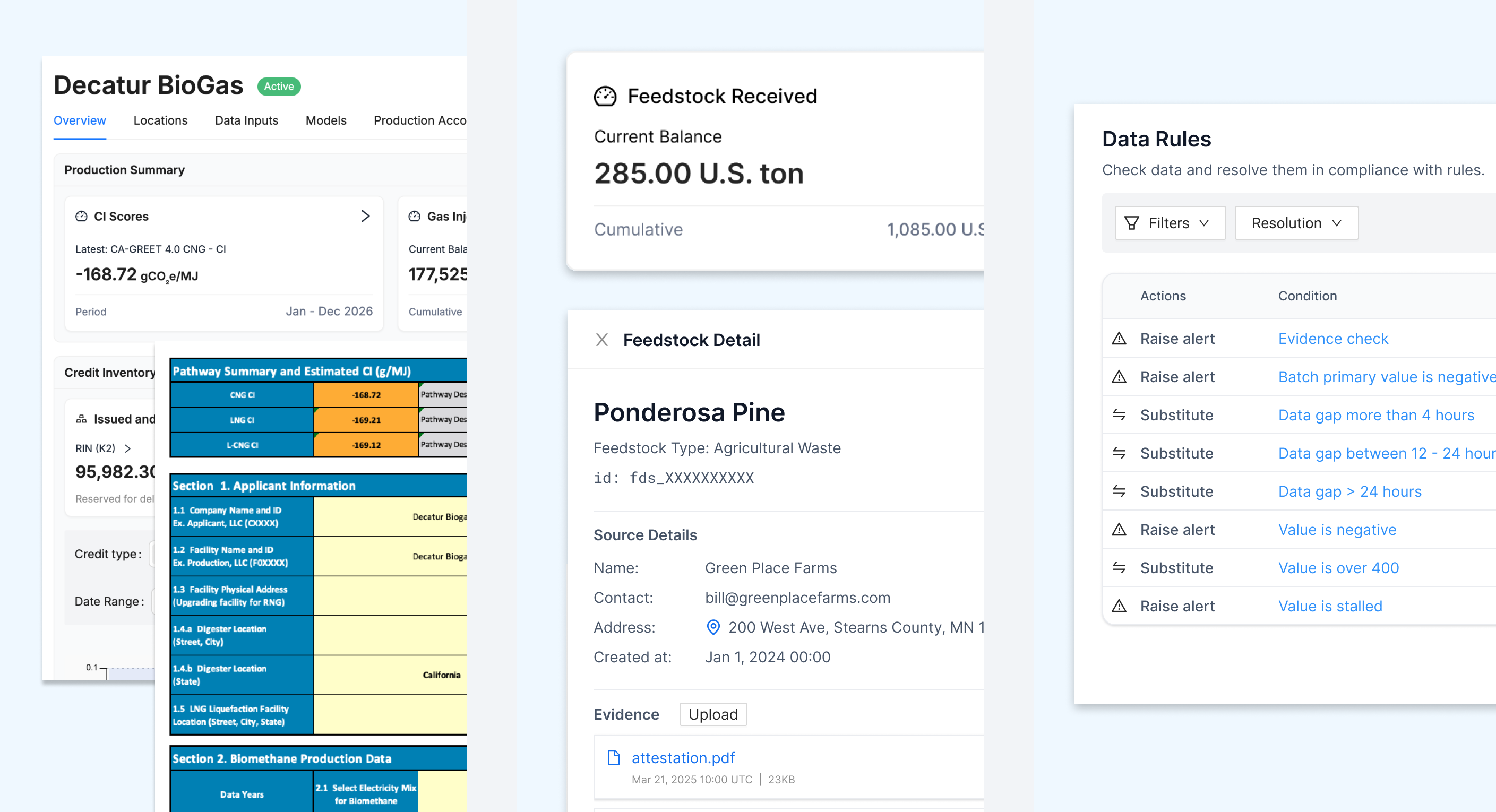

Renewable fuel programs are introducing stricter requirements, requiring operational data to be collected from multiple parties and systems. Teams need CI scores they can defend, a clear line from feedstock to fuel, and a way to allocate production across programs without double-counting.
Mangrove’s new suite of fuel accounting and compliance capabilities is built for exactly that. Today we’re launching CI score generation using the models registries expect, feedstock tracking, data gap and anomaly alerts with substitution rules, and multi-program allocation so one production stream can feed ISCC, CFR, LCFS, RFS, 45Z, and voluntary pathways from a single source.
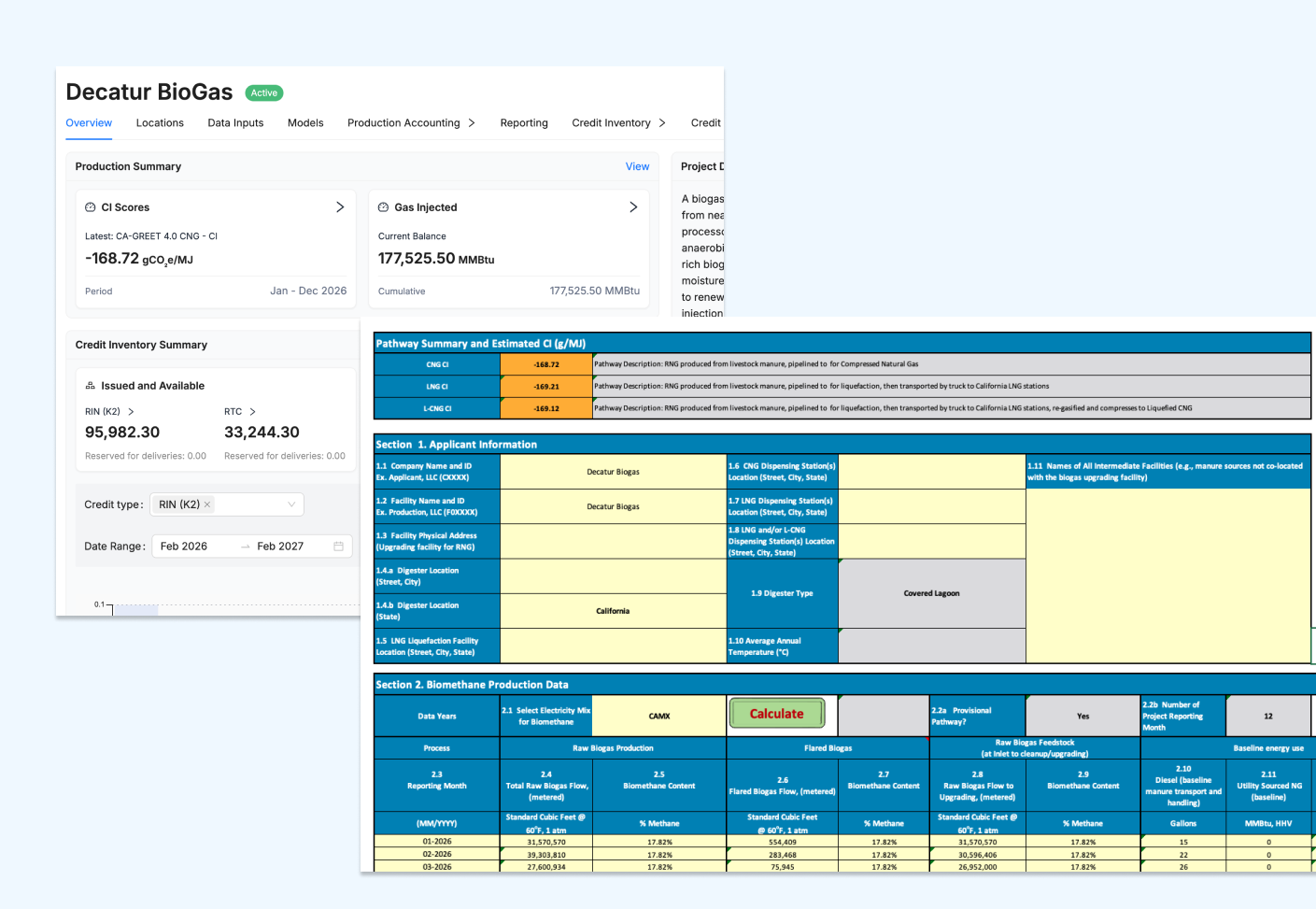
CI scores determine eligibility and credit issuances. Mangrove generates and tracks CI scores using the same models that registries and auditors expect: CA GREET 4, Argonne GREET, GHGenius, 45Z GREET, and other frameworks regulators accept. Operational inputs—feedstock mix, energy use, process data—flow into these models so reported CI matches program rules.
Projects can export a copy of the populated Excel model for each CI calculation. Auditors and counterparties get a reproducible record; the project spends less time on verification back-and-forth.
Where this applies:
.png)
Credits and compliance depend on knowing which feedstocks went into which production. Mangrove’s feedstock tracking traces production back to specific feedstocks and categorizes them by program-defined types (e.g. Fats, Oils & Greases; agricultural residues; manure) so project data matches what gets reported to LCFS, RFS, and other frameworks.
Feedstocks are defined at the project level and linked to events and production accounting. Projects can partition calculations by feedstock type, run separate carbon accounting for each stream, and filter events and batches by feedstock.
Where this applies:
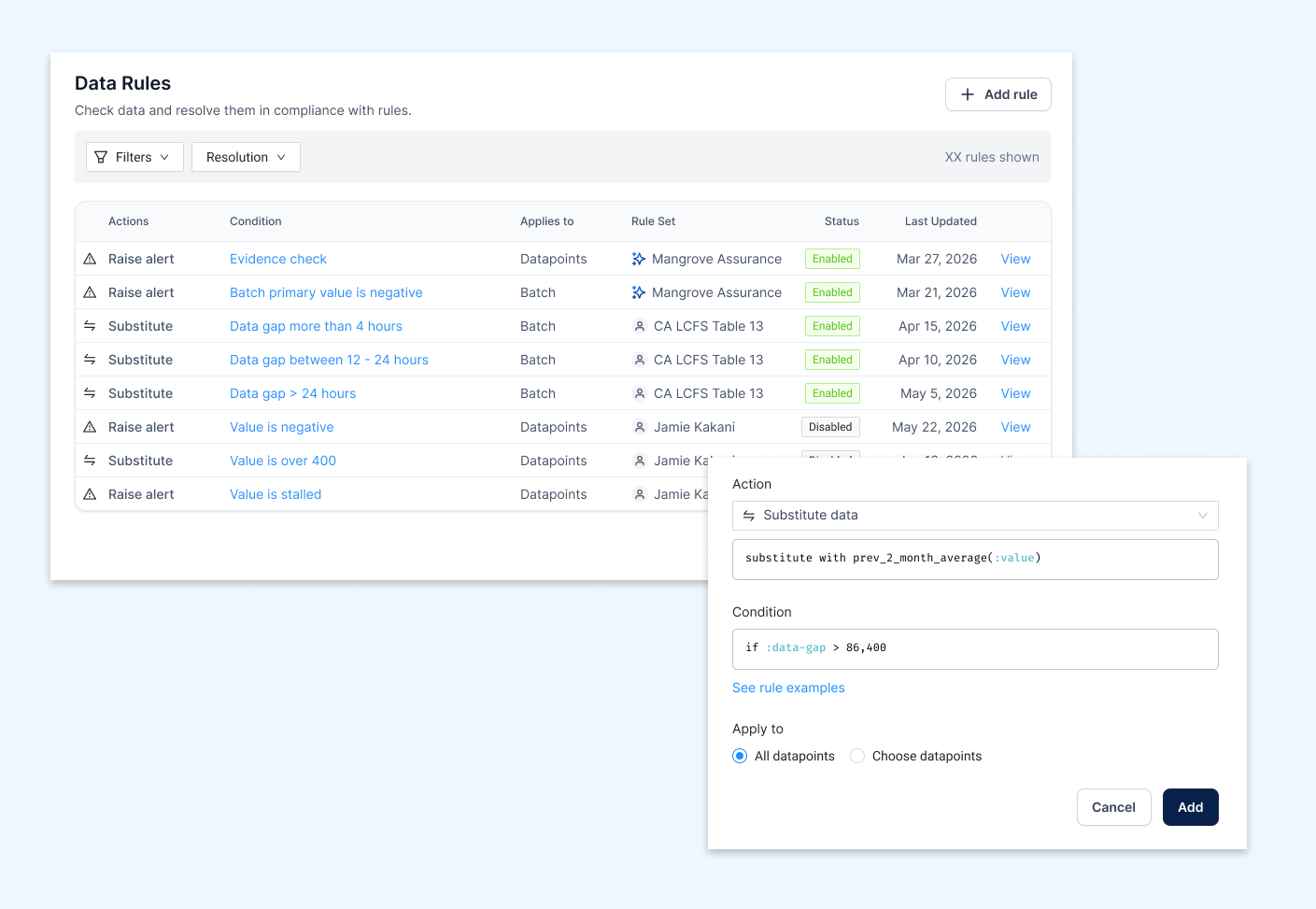
Missing or bad data delays reporting, triggers questions from verifiers, or forces last-minute substitutions. Mangrove's data rules help producers catch problems early. Configure rules so that when a primary data source has gaps or fails a quality check like having data that does not match evidence, the system applies defined fallbacks (such as default factors) and preserves the change for future review.
Rules are aligned with the program’s methodology—which data parameters need to pass, under what checks, and how failed checks are resolved. The result: fewer delays, clearer documentation when substitutions happen, and consistent handling across projects.
Where this applies:
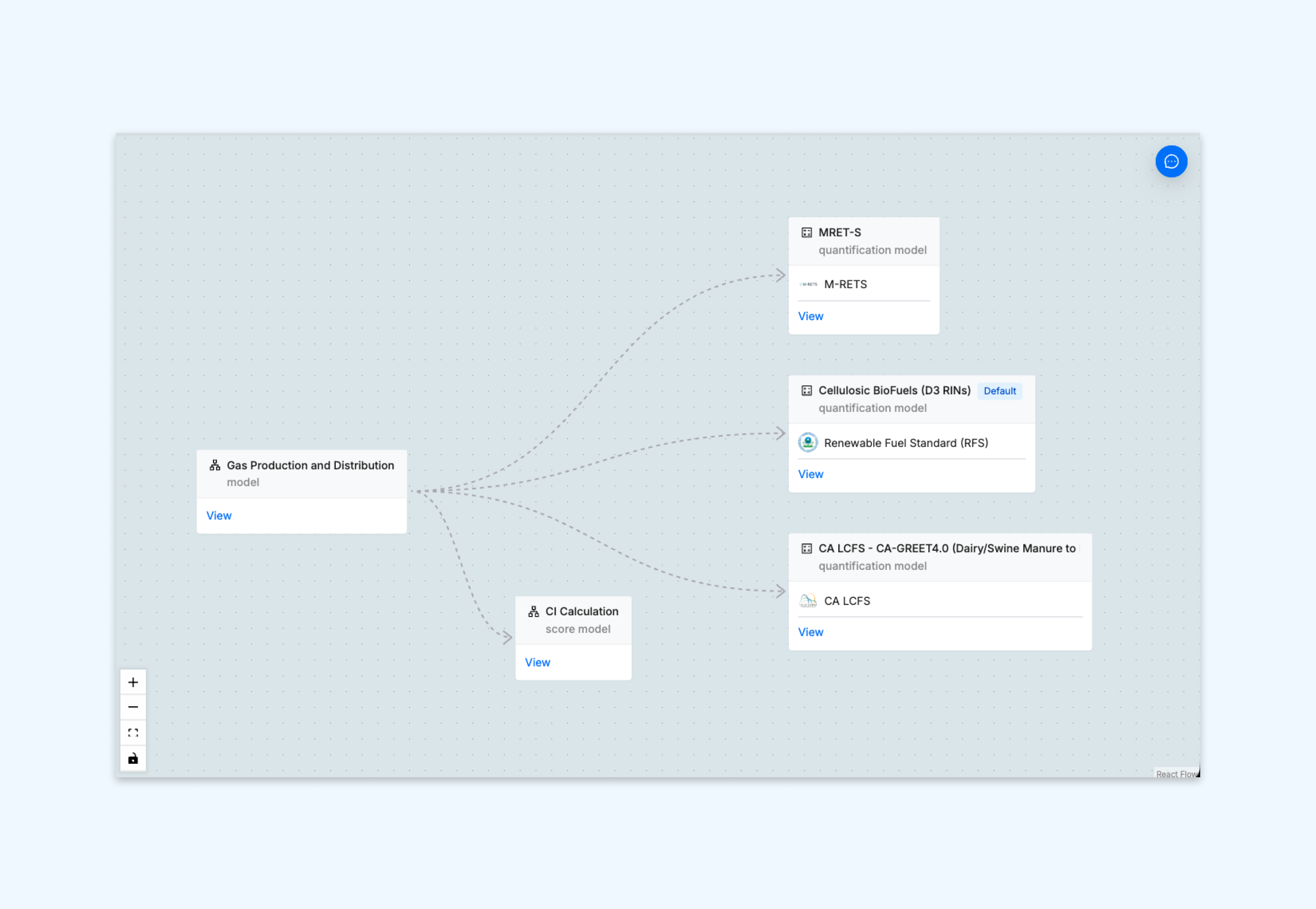
Fuel producers often monetize the same physical production across multiple value streams—LCFS, RFS, 45Z, voluntary—each with its own reporting cadence, methodology and evidence requirements. Mangrove lets projects split a single stream of ongoing production across programs, with allocation logic and program-specific reports.
Split production by feedstock, and the platform tracks allocated quantities, CI, and supporting data per program. One operational source, no separate spreadsheets, no double-counting risk.
Where this applies:
Spend less time reconciling inventory and mass balance spreadsheets, and more time closing offtakes and reporting on time. Mangrove also handles mass balance for co-mingled feedstocks, data integration, direct registry connections, and audit trails.
Reach out to your Mangrove representative or get in touch to see how fuel compliance can be configured for your project.


